

That’s all, Guadalupe
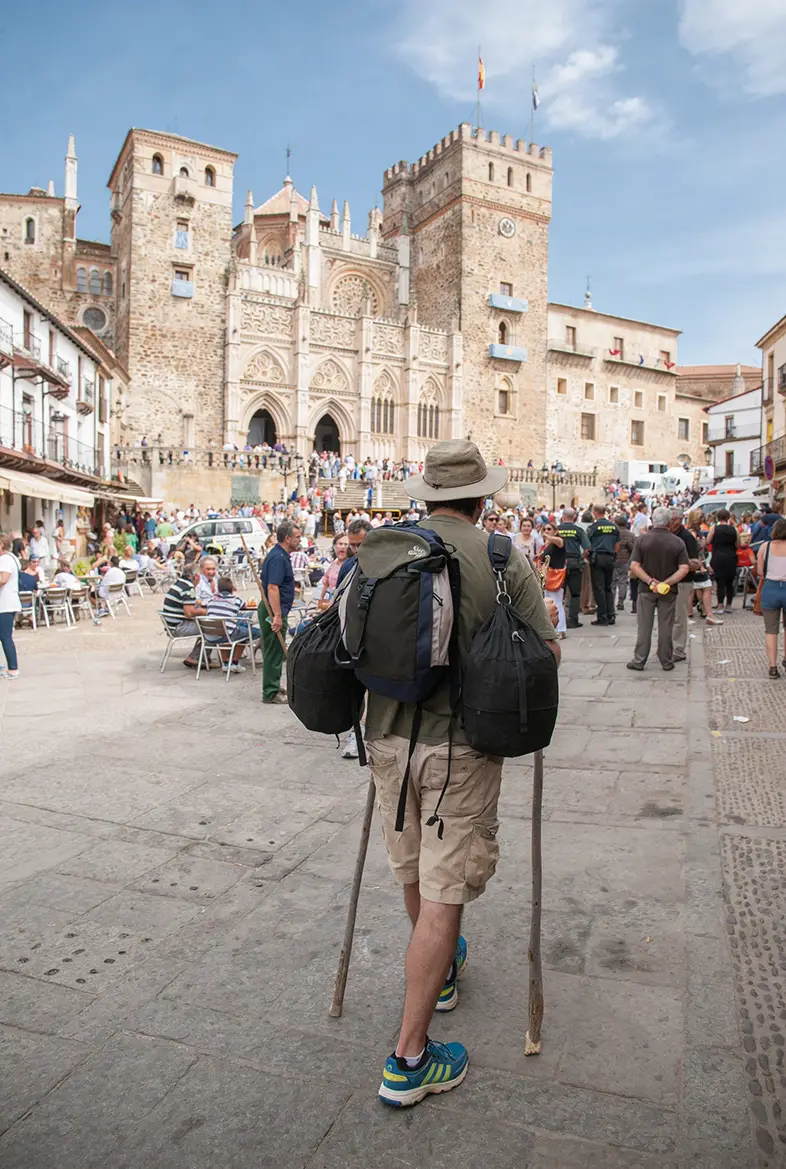
Guadalupe is one of those places that has a nasty habit of setting the bar too high right from the start. The monastery, the town of Guadalupe and everything that has sprung up around them form one of Extremadura’s great heritage sites. But on this getaway, Guadalupe isn’t the end of the line. It is the gateway to the geopark. So, before hitting the road, it’s worth taking a leisurely stroll. Take in the streets, visit the monastery and, above all, realise that we are about to shift our perspective: from the history of humankind to the history of the Earth.
It’s time for a scenic drive
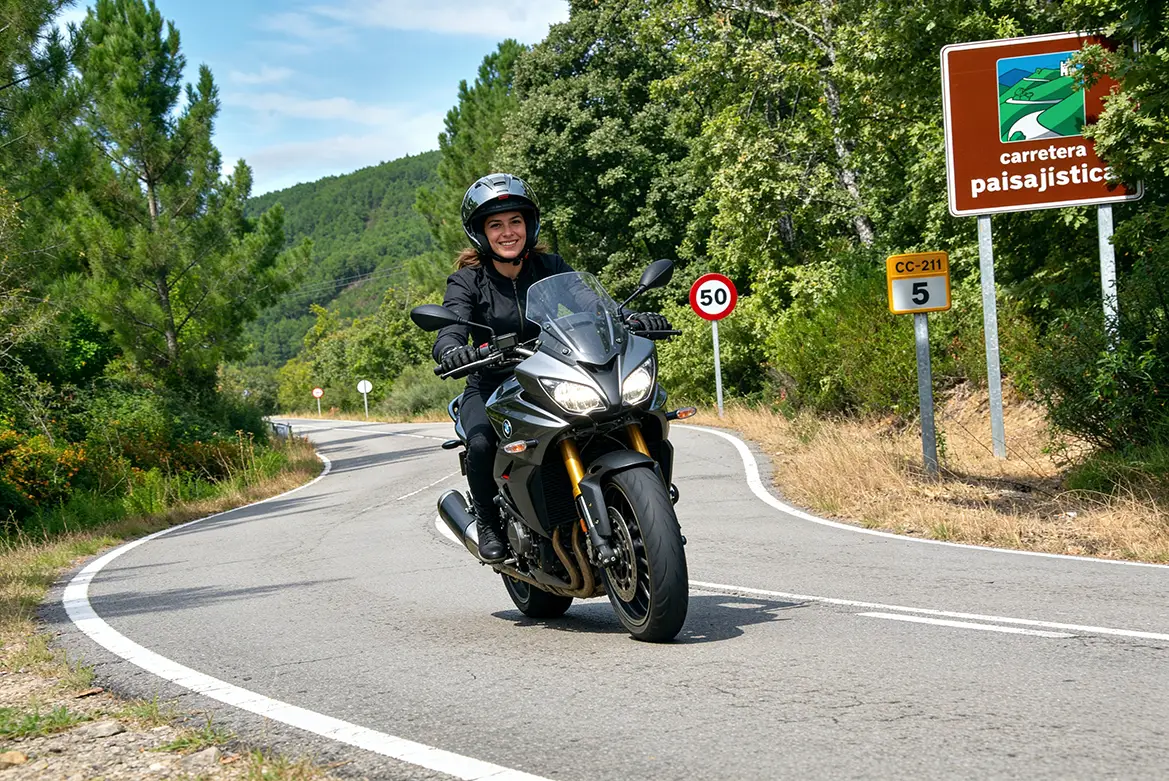
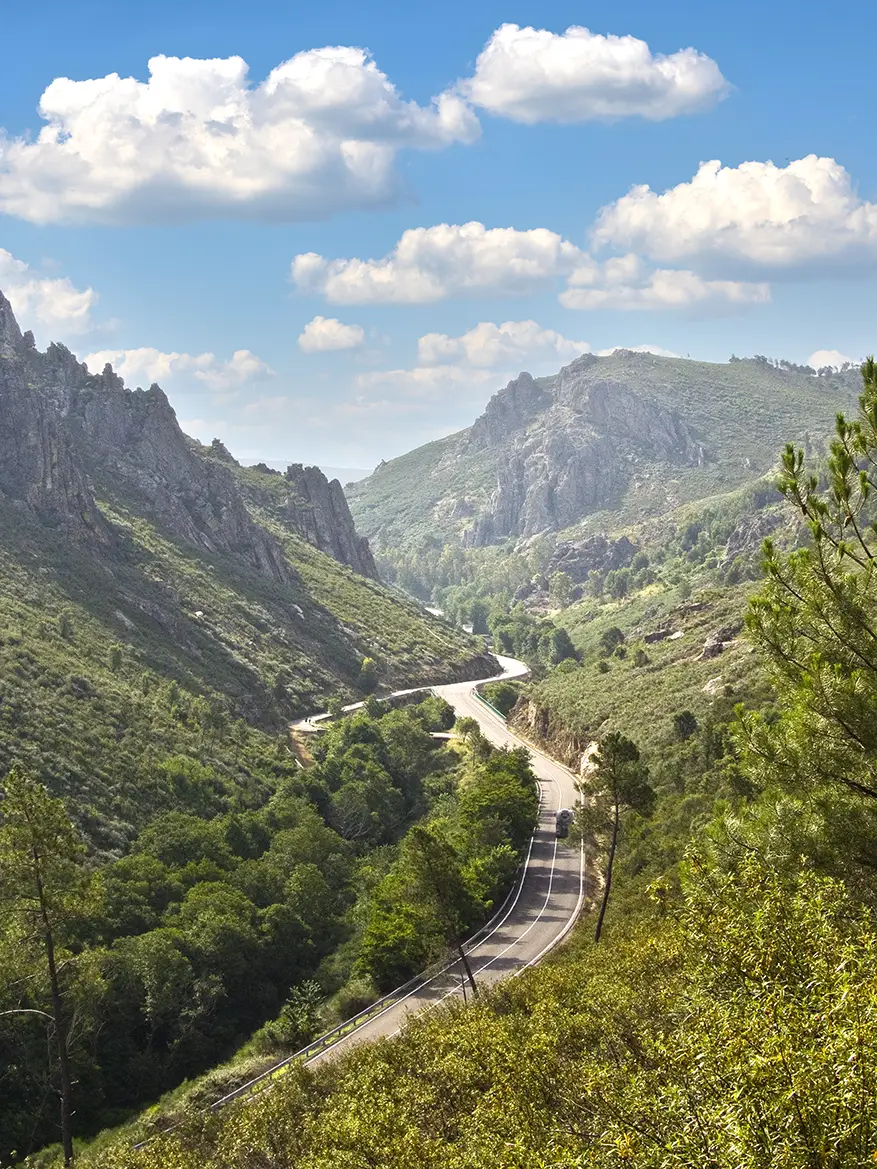
There are roads that are simply a means of getting there. And then there are those that make you feel a bit annoyed at arriving too soon. The road between Guadalupe and Castañar de Ibor is one of the latter. The landscape changes gradually and the mountains of the geopark begin to take centre stage. It’s a road to drive along with the window down, stopping whenever you feel like it to take in the smells and the views. → TOP: The route itself is considered a scenic road within the geopark and allows you to discover, amongst other attractions, the Castañar Cave and the Castaños de Calabazas.
Inside the Earth
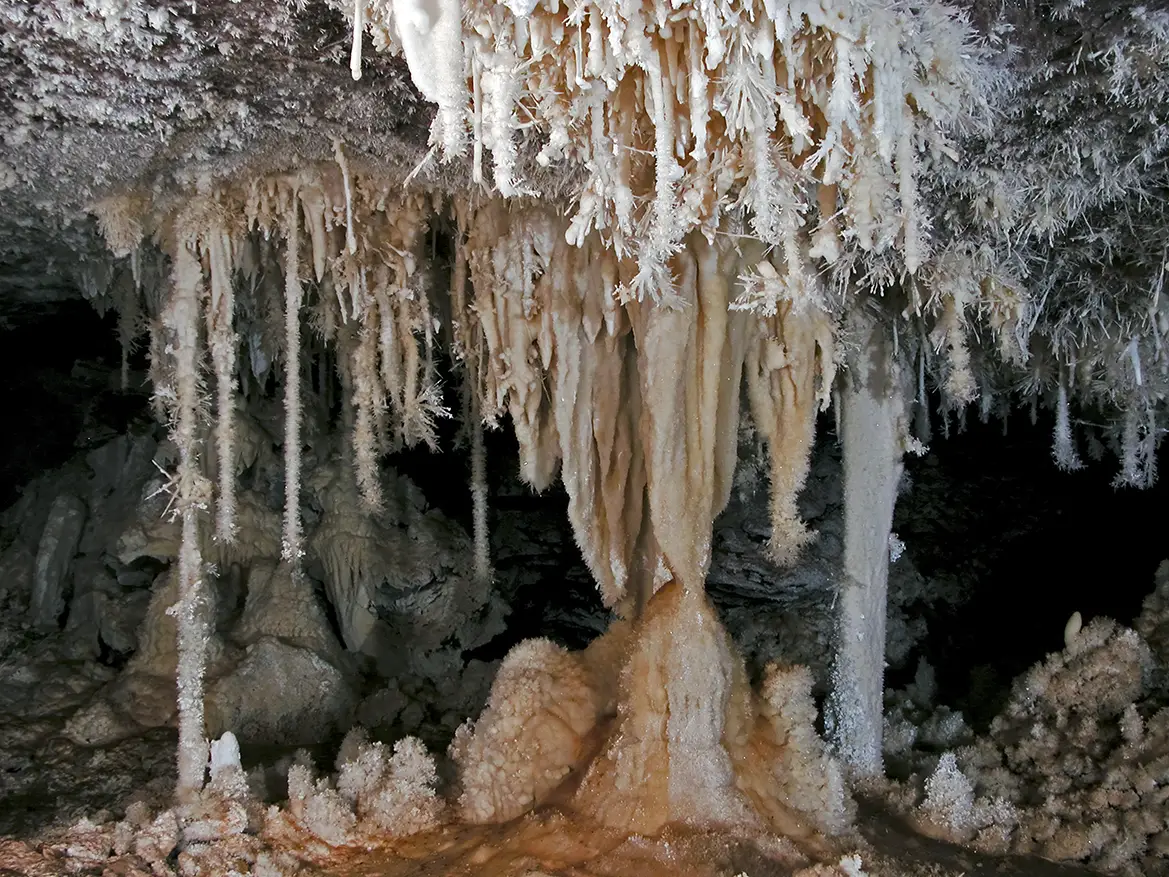
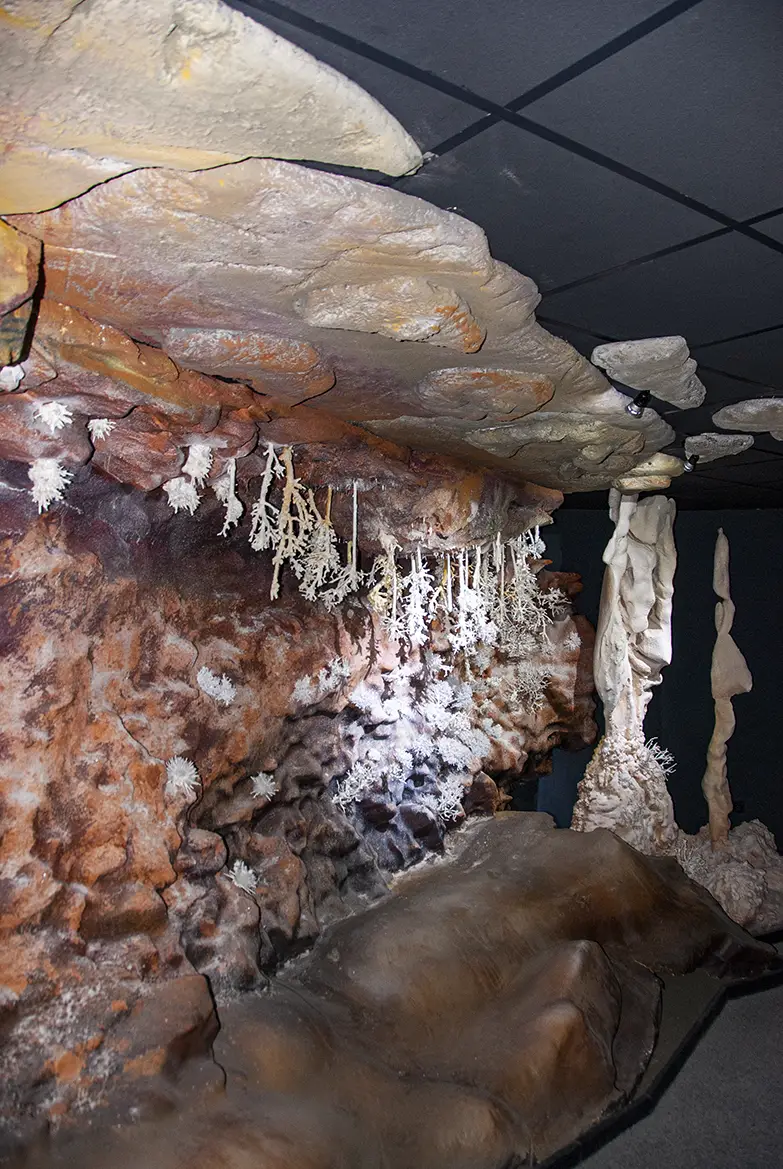
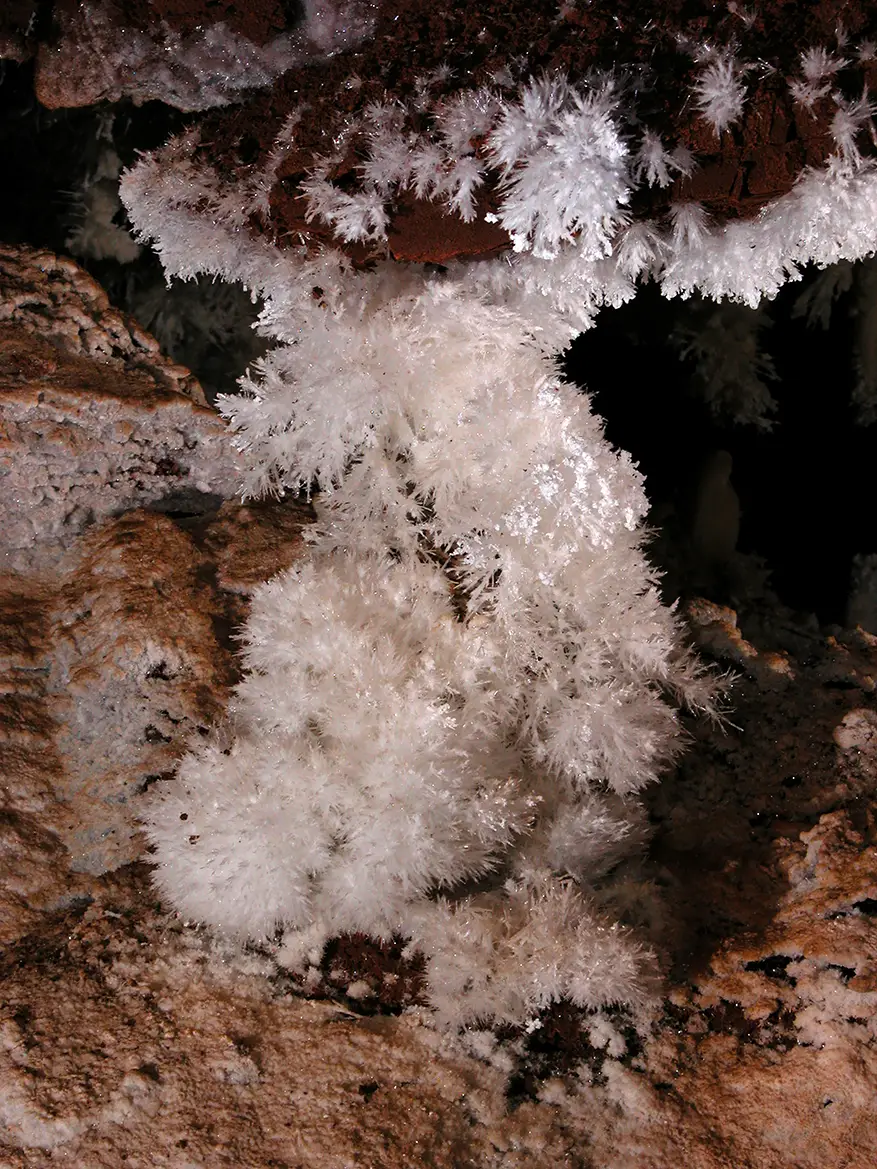
Up until now, we’ve been looking at the site from the outside. Now it’s time to discover what lies within. The Castañar Cave is one of the geopark’s great geological treasures. It is a particularly fragile environment where the action of water and the passage of time have created a veritable mineral forest of speleothems and aragonite crystals. Visits to the interior are strictly controlled, precisely to protect this heritage. If you don’t have a booking, don’t worry: the Interpretation Centre offers a 3D recreation of the cave.
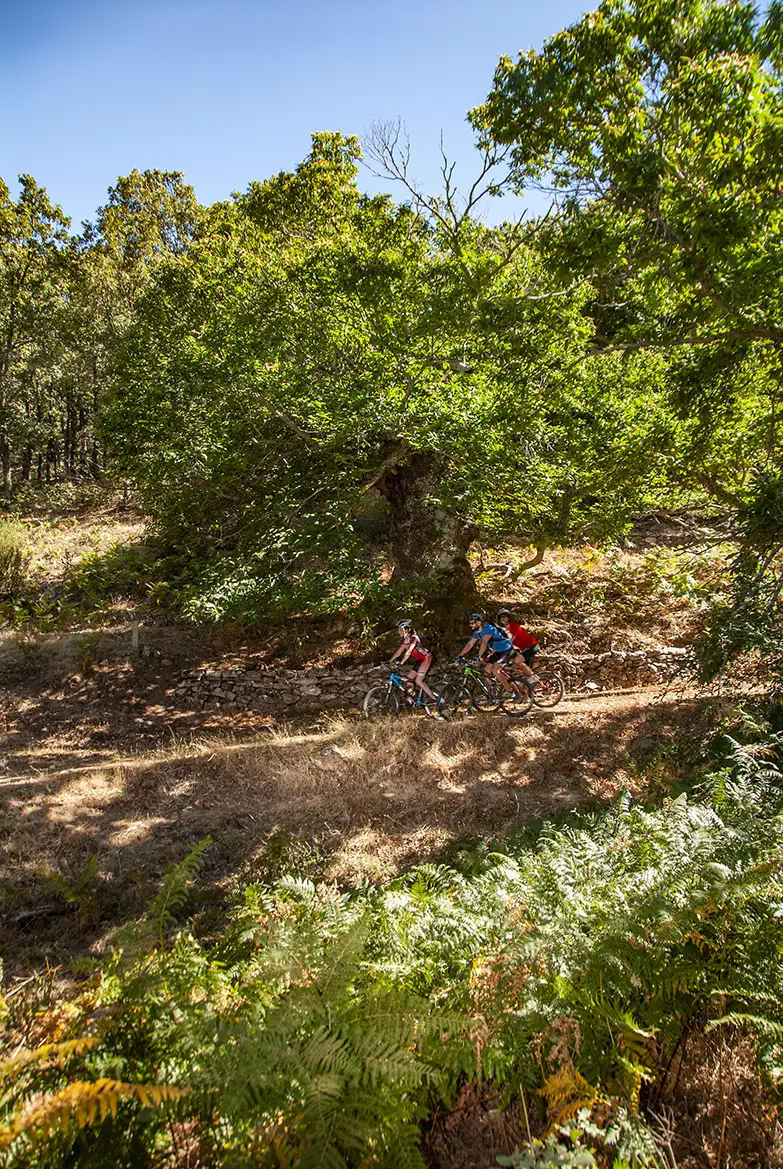
Chestnut Trees
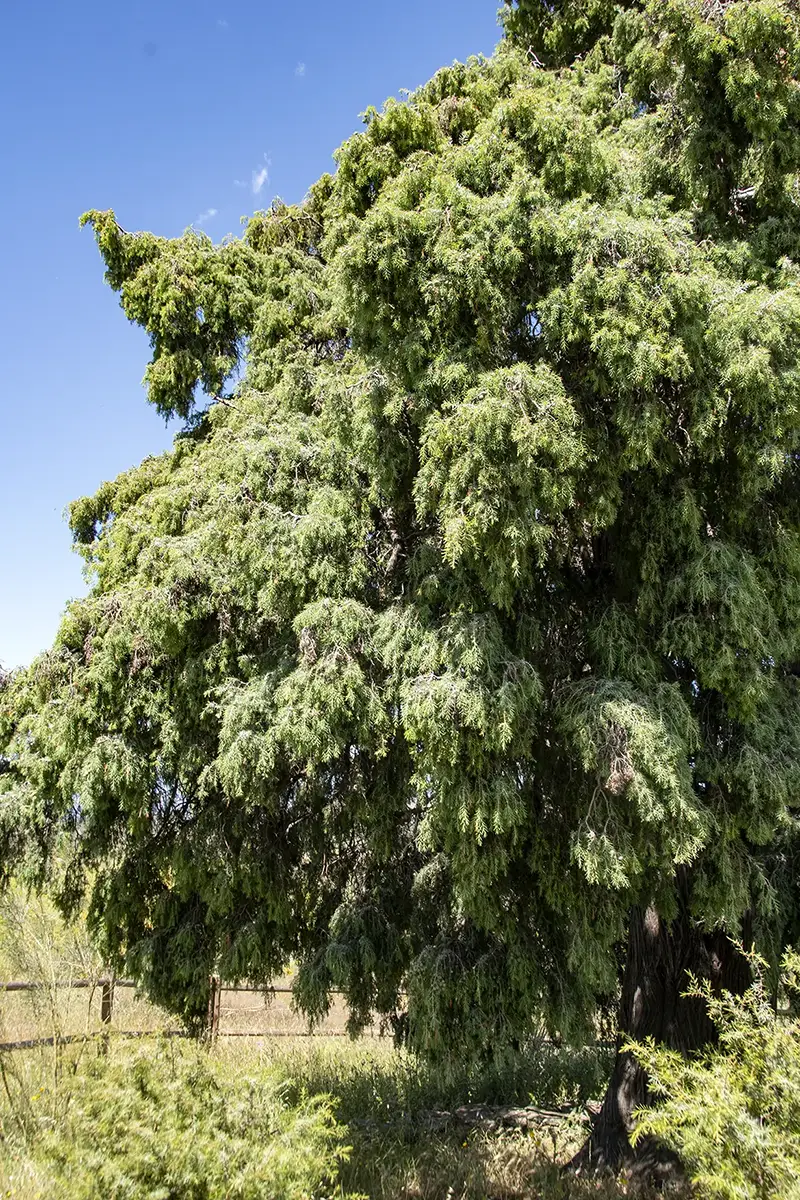
The chestnut trees of Calabazas comprise a group of seventeen specimens, some of which are over seven hundred years old. Their twisted, hollow trunks are the result of centuries of growth and use by local communities. They are trees, yes. But they are also a record of the past.
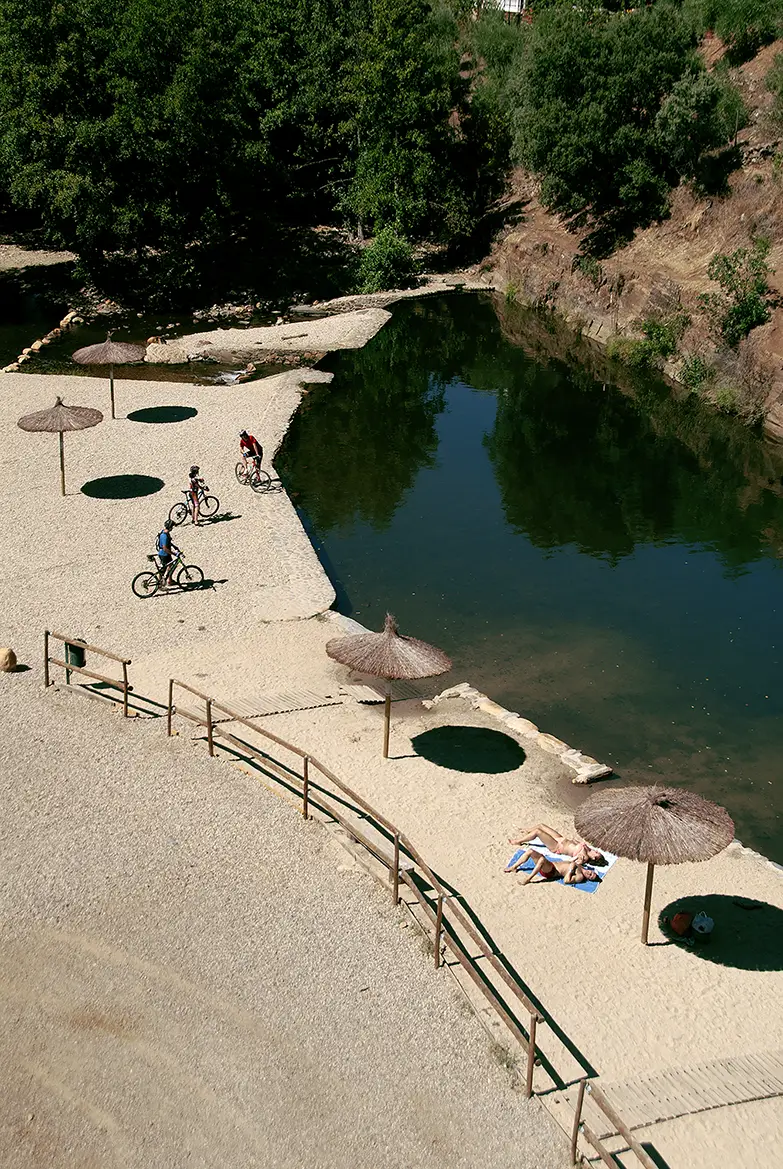
The natural swimming pool at Castañar de Ibor
After all that talk of geology, it’s worth remembering that mountains also have water. The natural pool at Castañar de Ibor is the perfect place to take a break, especially during the hot summer months. A quick dip, a spot of shade, and then we’re off again.
CUISINE · THE LANDSCAPE ON YOUR PLATE
We continue on to Navalvillar de Ibor, where the journey takes on a whole new dimension. Here, the geopark ceases to be merely a succession of mountains, caves and unusual trees, and becomes a living landscape: villages, crops, livestock, local produce and a way of understanding the landscape that has been shaped over generations. → TOP: look out for PDO products such as Ibores cheese, Villuercas Ibores Jara extra virgin olive oil or Villuercas-Ibores honey. The geopark can also be explored with a knife and fork.
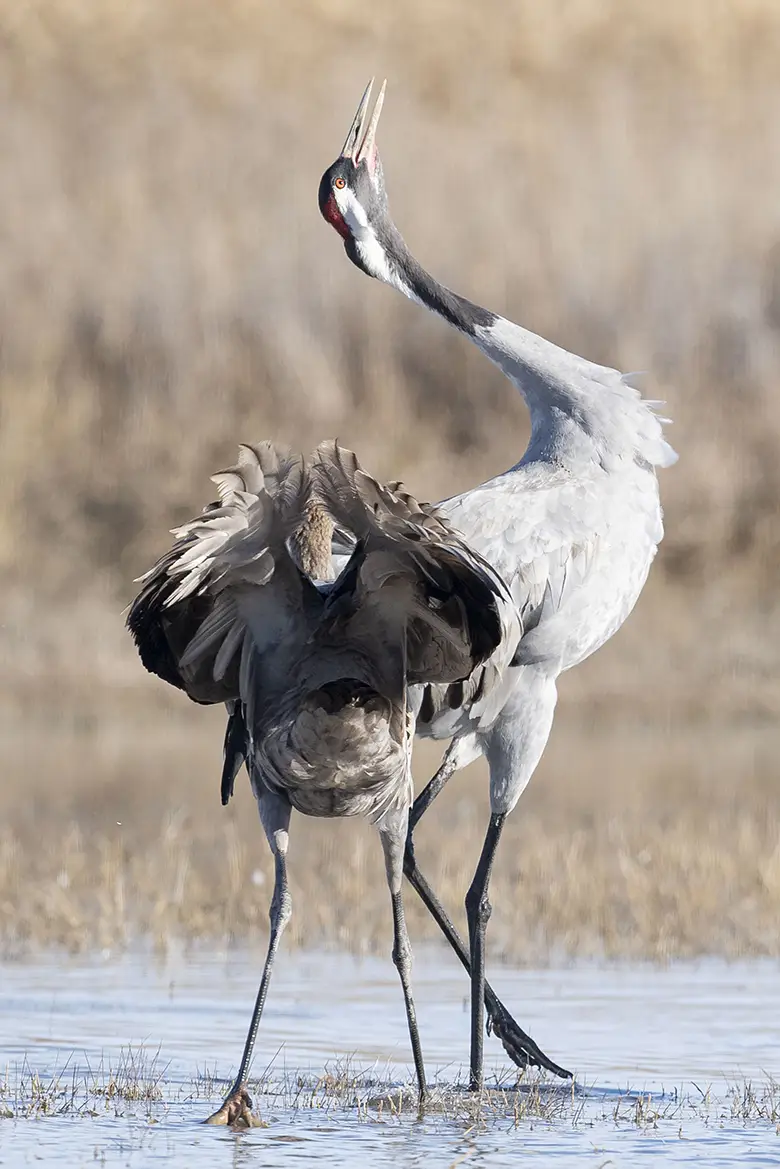
BIRDING · LOOK UP
The mountains aren’t just there to look at. The terrain, forests and open spaces of the geopark also offer opportunities for birdwatching. The ‘Birding in Extremadura’ route through the geopark combines travel by car with walking tours, featuring observation points from Guadalupe to Castañar de Ibor, Navatrasierra and other locations in the area. → TOP: bring your binoculars. They might prove just as useful here as your walking boots.
END
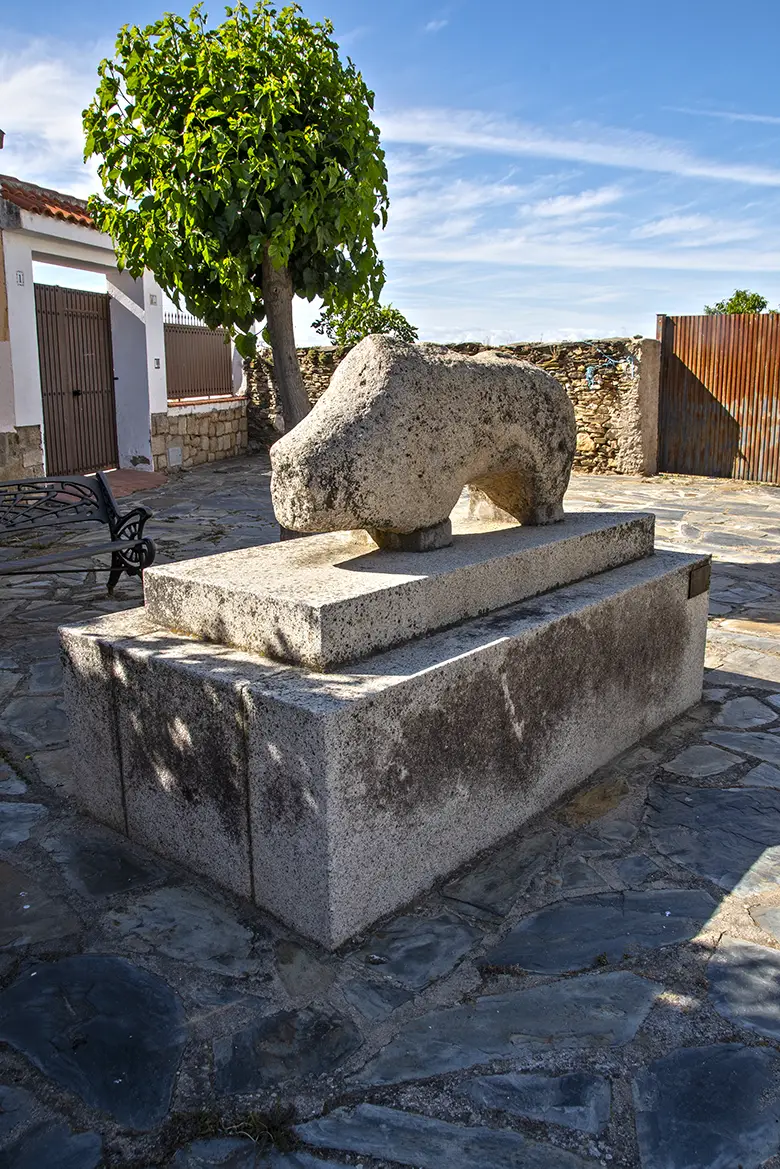
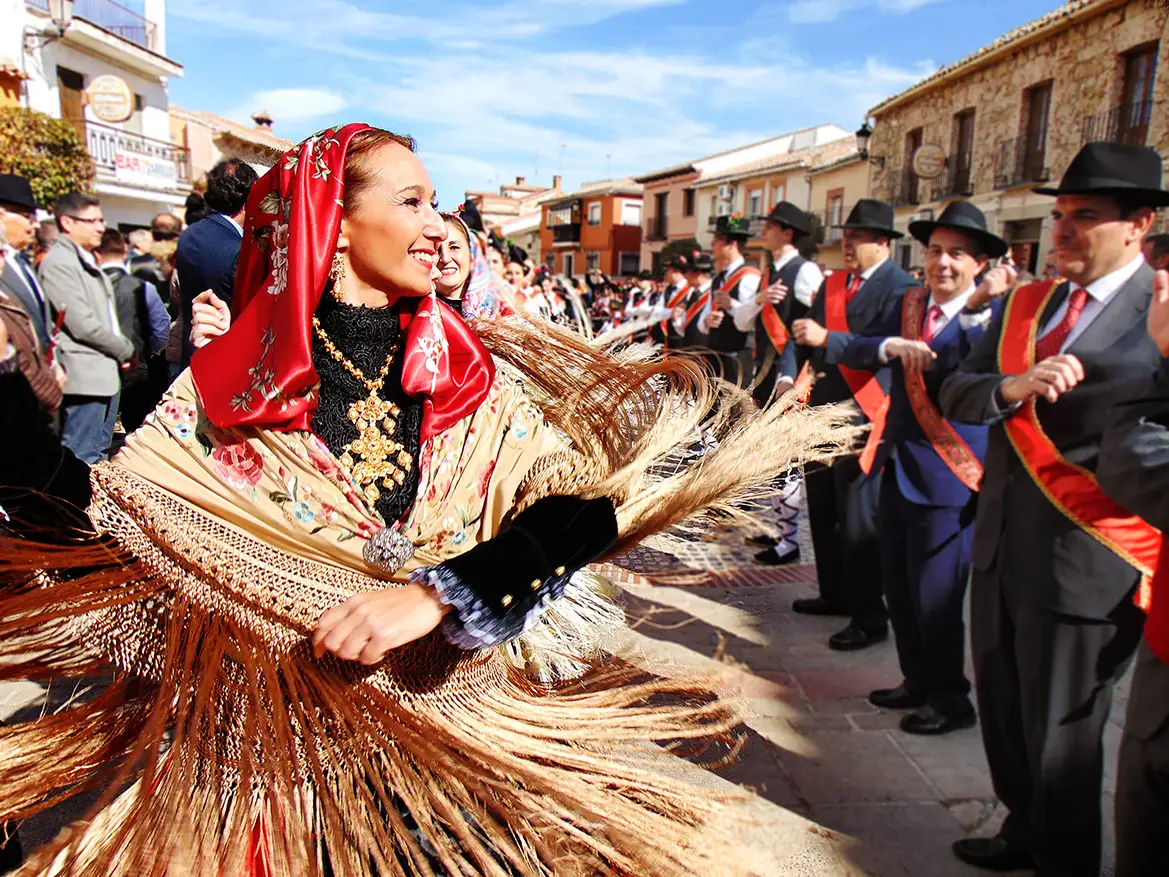
That brings the first day to a close. Today we started in Guadalupe and ended up travelling much further back in time: deep into the heart of a mountain, amongst minerals, centuries-old trees and landscapes that began to take shape millions of years before anyone even thought of building a road. But there’s still one piece missing. Us. Tomorrow we’ll follow in the footsteps of those who came later: the first settlers, the Vettones, their stone animals, their traditions and the villages that still preserve part of that memory. Because after discovering how the earth was formed, it’s time to discover what we did with it.
 Spanish
  English