
- 2 days
- 129 / 73 km.
- By car / motorbike
There are journeys that take you across a land. And then there are those that span millions of years.
It begins amongst holm oaks and cork oaks, with birds of prey soaring over the pastureland and the Tagus still close by. Then the road begins to climb, the mountains fold in on themselves and the landscape becomes a sort of life-size geology textbook.
You don’t need to know the names of all the synclines, anticlines and ichnofossils. You just need to look. And stop. And look again.
Two days to travel from Monfragüe to Guadalupe, passing from a biosphere reserve to a UNESCO Global Geopark. 450 million years. And yet there are still those who think they’re just coming for a drive. And yes: you can eat it too.
___
➸ DAY 01 (129 km) · See map
Malpartida de Plasencia → Toril → Saucedilla → Romangordo → Cabañas del Castillo
➸ DAY 02 (73 km) · See map
Cabañas del Castillo → Berzocana → Cañamero → Guadalupe

Malpartida de Plasencia and the Vetonian princess
We begin where the previous excursion ended and where this one begins. Malpartida de Plasencia is one of the gateways to the Monfragüe region and a good starting point for understanding what lies ahead. We’re still in the dehesa here, but the mountains are already beginning to appear on the horizon. → TOP: head over to Cerro de los Castillejos, where you’ll find an archaeological site, a tomb and a rather special princess.
Toril and the Monfragüe Portico
First stop: Toril. At the Pórtico de Monfragüe interpretation centre, we can discover how this ecosystem works – it seems simple until you start to look into it. The dehesa, livestock, biodiversity and landscape all form a single entity here. And if, after your visit, you still see an oak tree as just an oak tree, you really ought to take a closer look. → TOP TIP: make the most of being in Toril to try some cocido. At the San Blas bar, they’ve got a real knack for making it well. Really well, in fact.
Saucedilla and Arrocampo
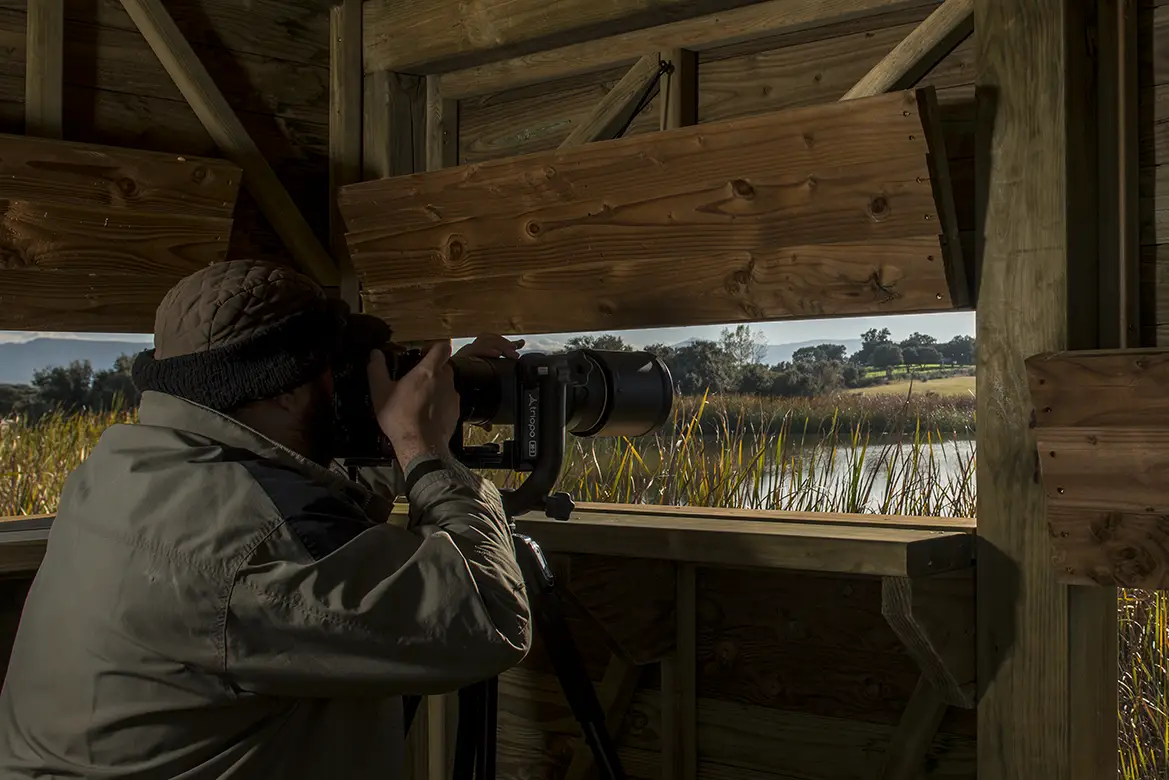
The road continues towards Saucedilla and the Arrocampo reservoir, one of the area’s best spots for watching waterbirds. Herons, cormorants, grebes and other species turn this watery landscape into yet another of Monfragüe’s birdwatching hotspots. → TOP: take your binoculars. You’ll certainly get your money’s worth on this stretch.
By day, you can see the landscape. By night, the universe
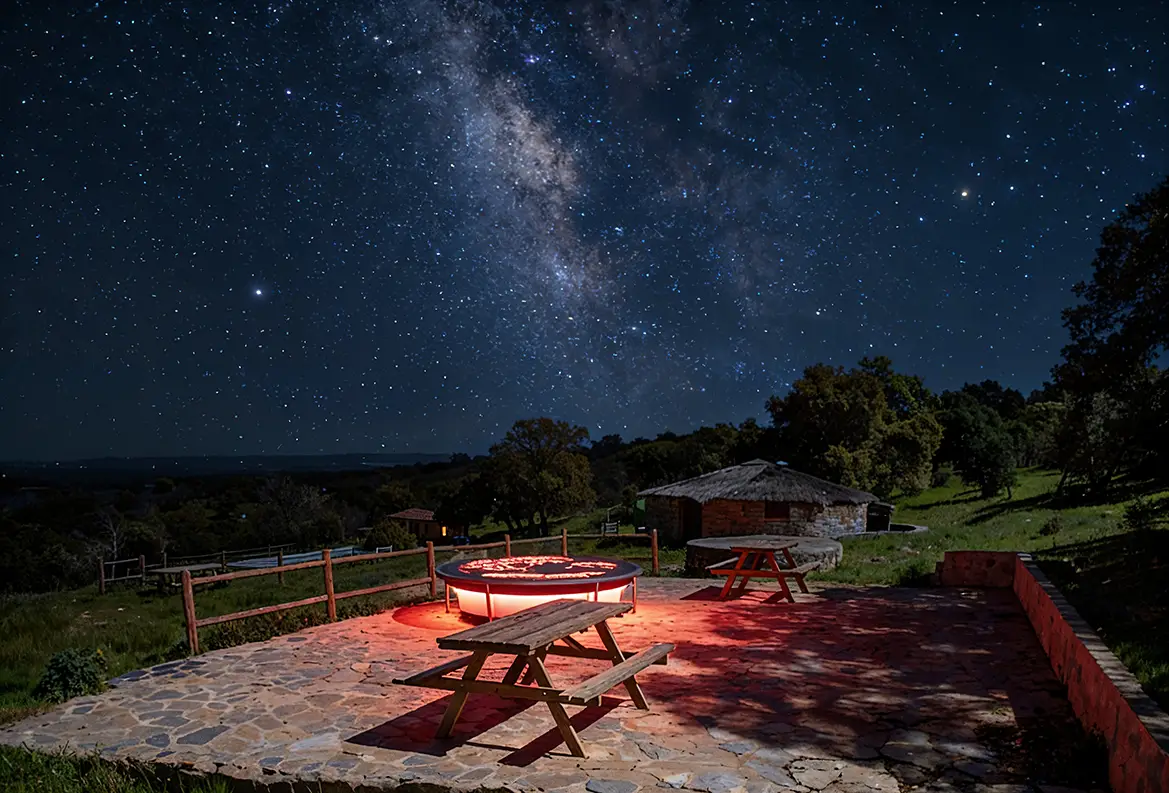
It’s worth making a special stop here. The Los Huertos stargazing viewpoint in Serrejón offers magnificent views over the village and the Sierra de Gredos, but its true purpose comes to the fore when night falls. It forms part of Extremadura’s network of starlight viewing points and is situated within the Monfragüe Starlight Destination. Its illuminated display shows the sky as it appears at different times of the year.
The village that decided to paint its walls, Romangordo
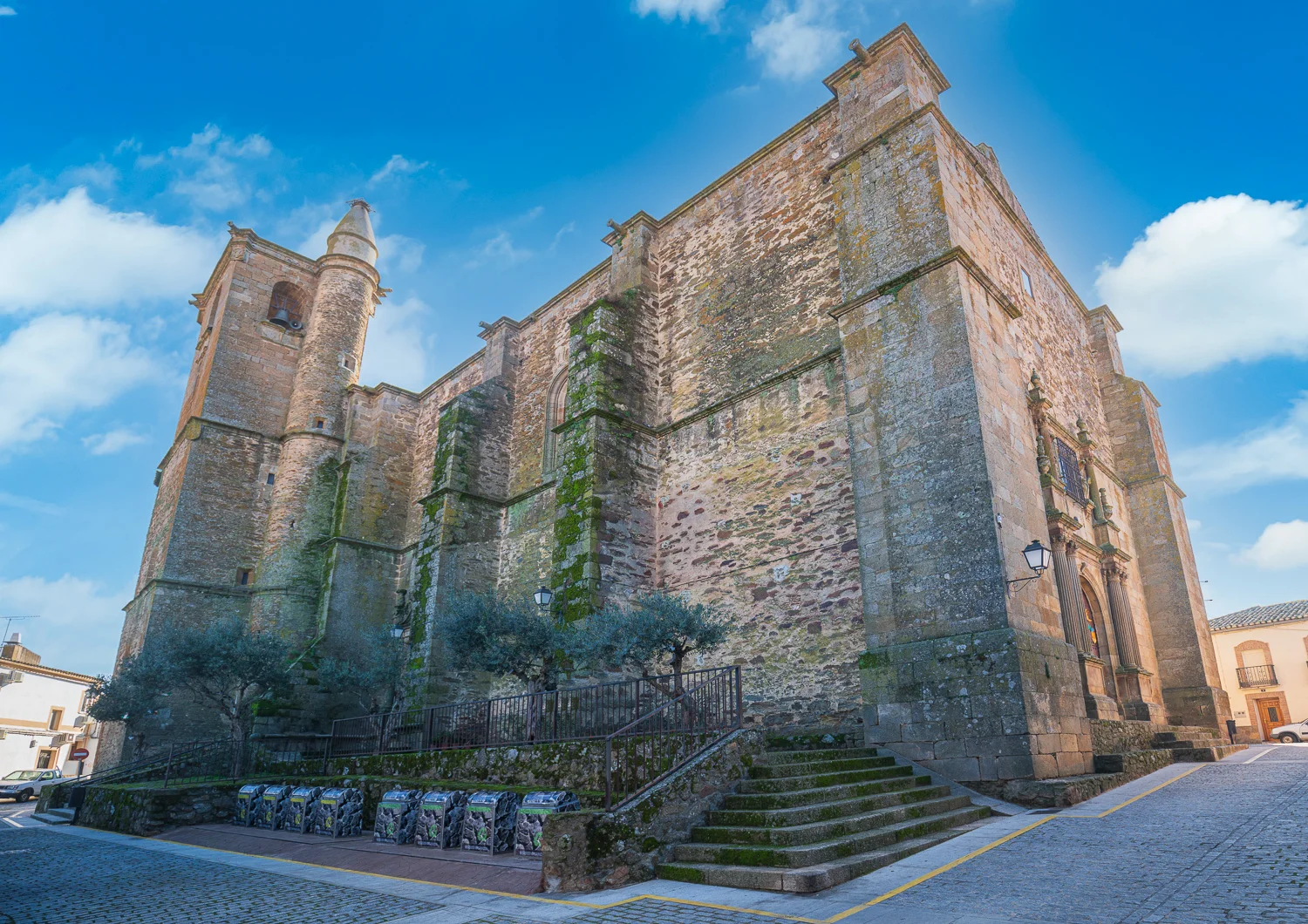
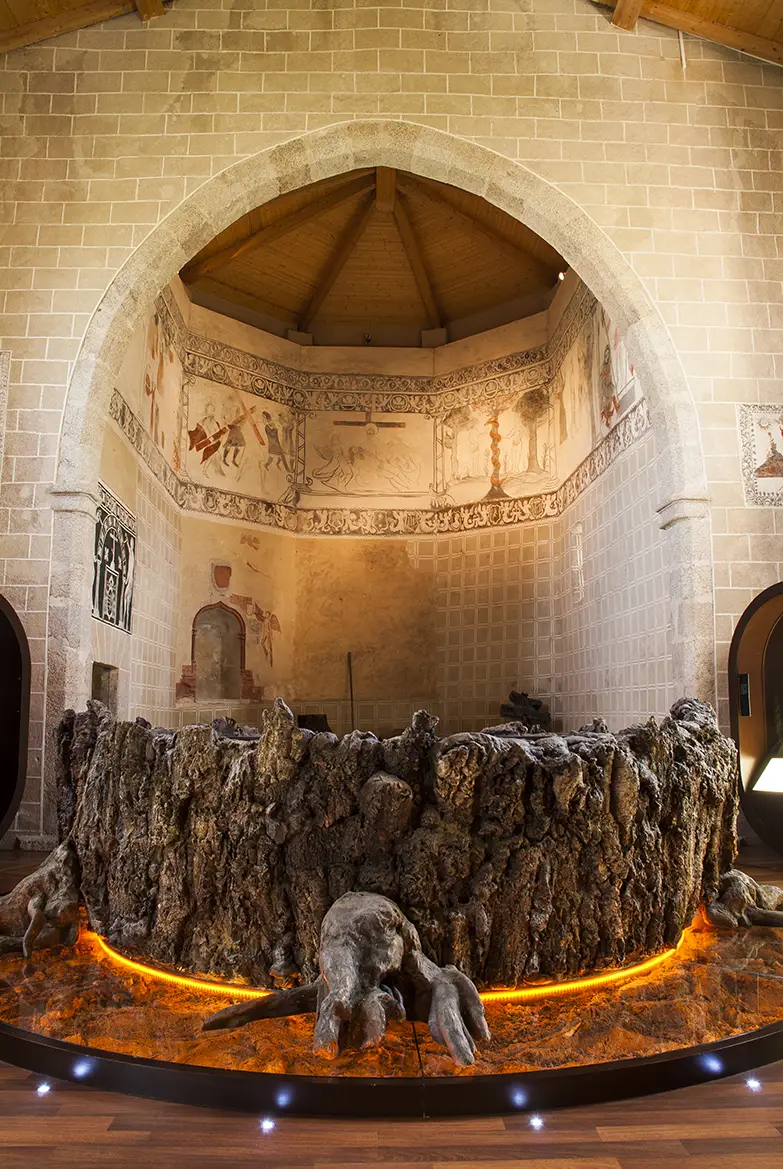
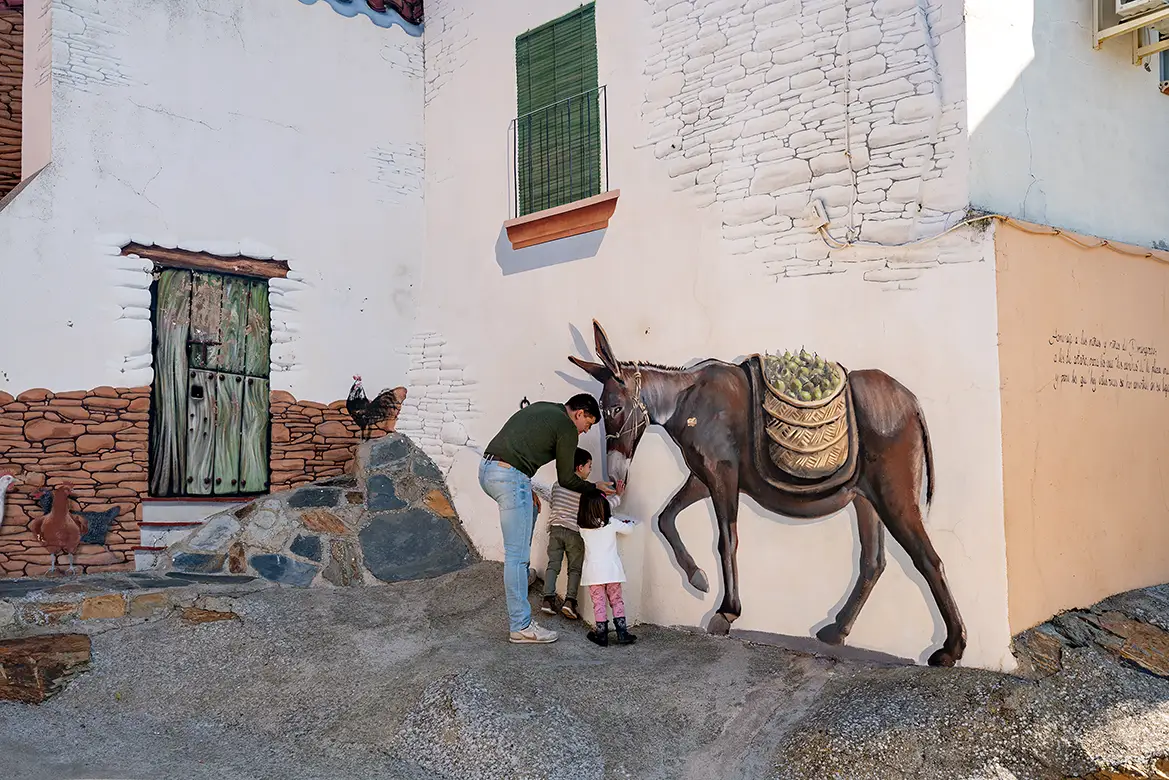
Romangordo is famous for its trompe-l’oeil murals, which transform doors, façades and everyday corners into little stories of rural life. That’s precisely the charm of it: walking around without really knowing what’s real and what isn’t. A door may be a door. Or it may not be. → TOP: the Casa del tío Cáscoles ecomuseum, the Church of Santa Catalina, the Casa de los Aromas and the remarkable tree at El Venero are Romangordo’s must-sees. One by one.
Beekeeping in Higuera de Albalat
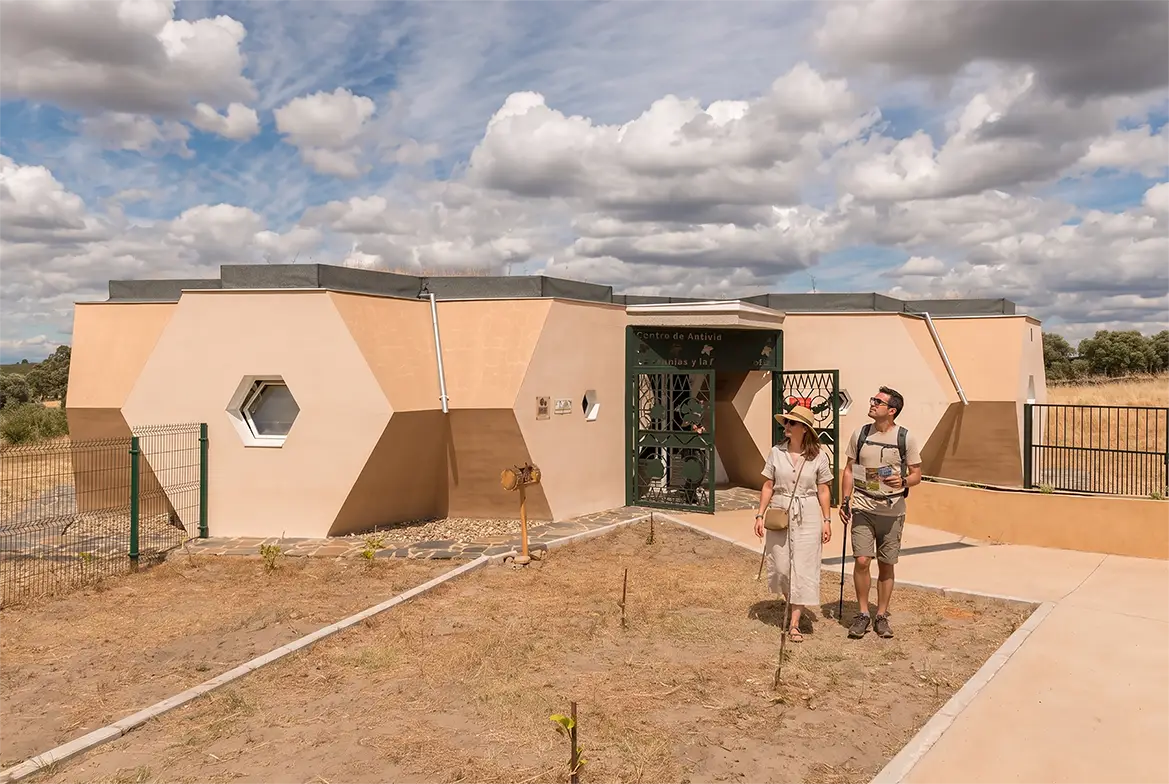
If we told you we were going to visit an interpretation centre, you might picture information panels, display cases and a sad bee mascot. Well, no. The Bees and Biodiversity Activity Centre (CASAB) offers exactly the opposite: the chance to put on a beekeeper’s suit, make candles from beeswax, discover how a beehive is organised and learn to distinguish between different types of honey. And yes, there’s a real beehive behind a glass pane. → TOP: highly recommended if you’re travelling with children. You’ll come away looking at flowers — and bees — in a whole new light.
On the way to the Geopark
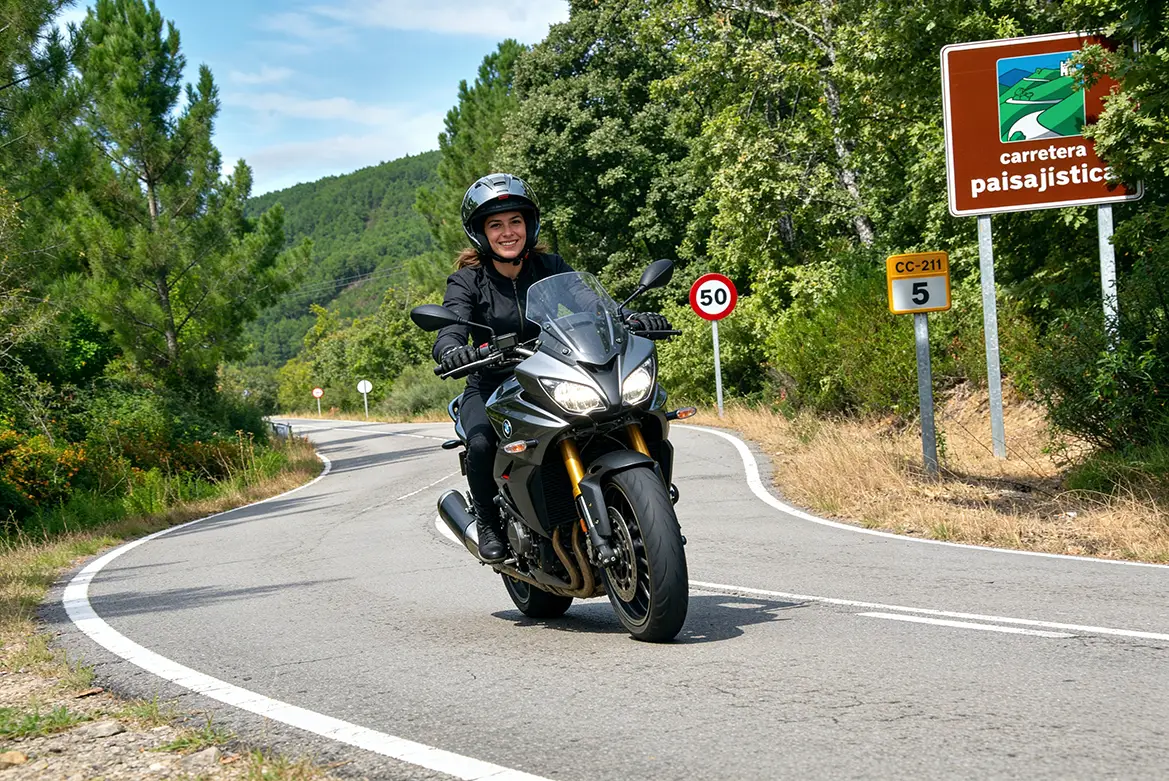
From Romangordo onwards, the journey enters a whole new dimension. The pastureland gradually gives way to a more rugged landscape, and the road begins to reveal the star attraction of the next few kilometres: the Appalachian-style landscape. This is where the great journey through the geoparc officially begins. → TOP: don’t be in such a hurry to reach the next stop. This stretch is part of the experience.
The viewing platform that collapsed
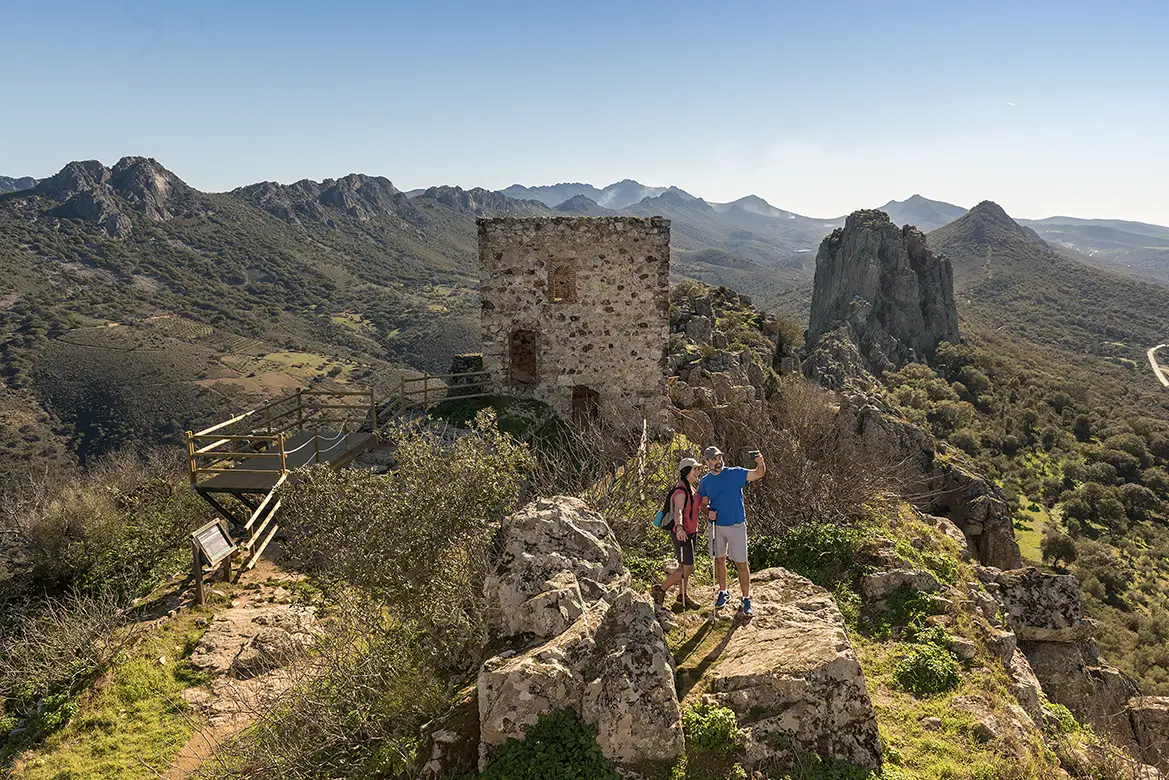
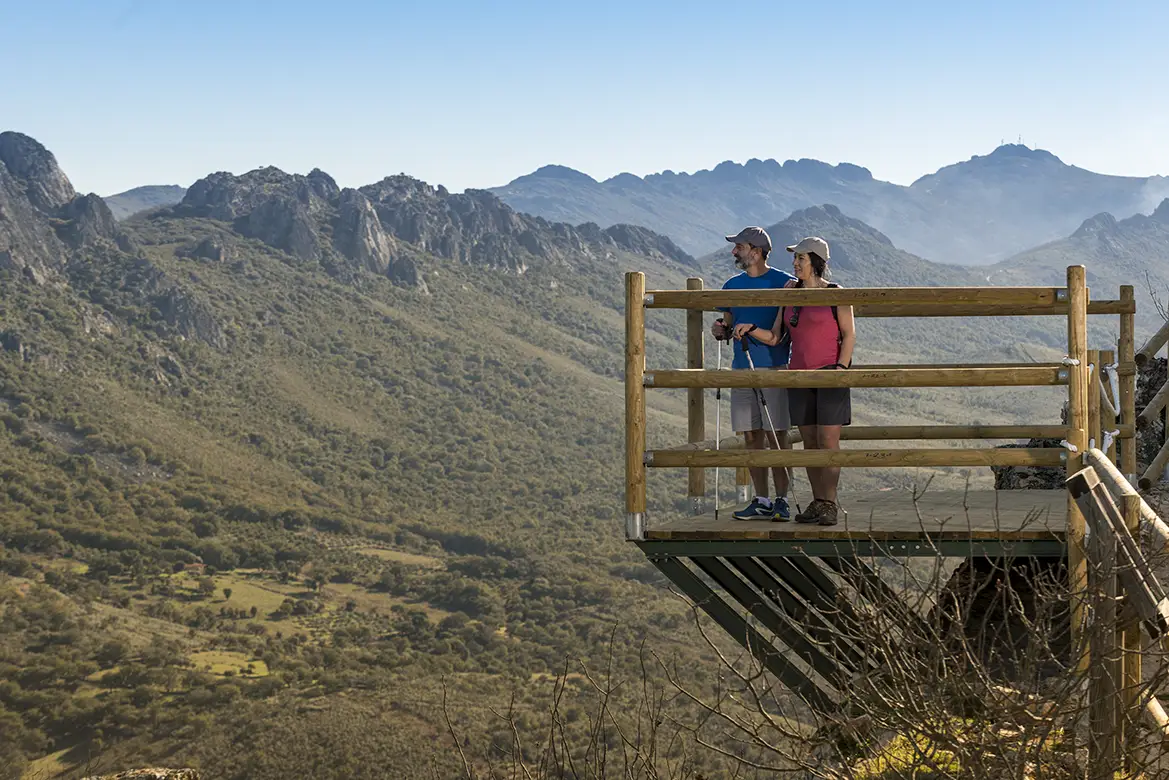
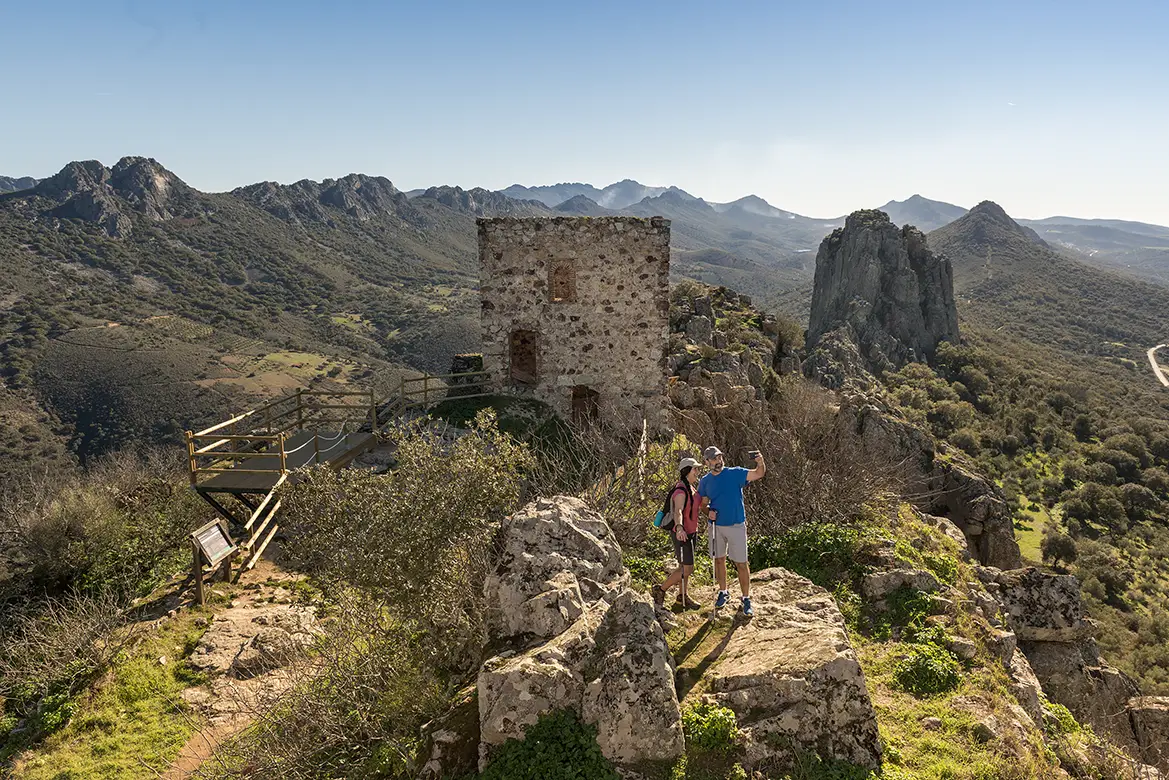
We arrive at Cabañas del Castillo and it’s time to look up. The castle stands atop an impressive rocky outcrop and offers one of the best panoramic views of the geopark. From here, you can really appreciate the landscape of parallel mountains, valleys and ridges, which is reminiscent of the Appalachian Mountains. It’s a bit of a climb. But the views are well worth it. → TOP: Cabañas Castle is one of the geopark’s five major geosites.
A FINAL
That brings the first day to a close. After birds, pastures, street art and mountains, it’s time to rest. Because tomorrow the road will continue into the geopark and take us to one of its major highlights: the earliest settlers, the cave paintings, the geology and Guadalupe. And we haven’t even reached the oldest part yet.
Cabañas del Castillo
The second day starts at the top – literally. From Cabañas Castle, we’re treated to one of those panoramic views that help you understand what ‘Appalachian-style terrain’ really means: long ranges of mountains, parallel valleys and quartzite ridges that seem to stretch on and on to the horizon. There’s no need to go to the United States, really. The Appalachians are right here. → TOP: if you didn’t climb up to the castle yesterday, now’s the time. It’s one of the best views on the route.

The Earth has been speaking for 450 million years
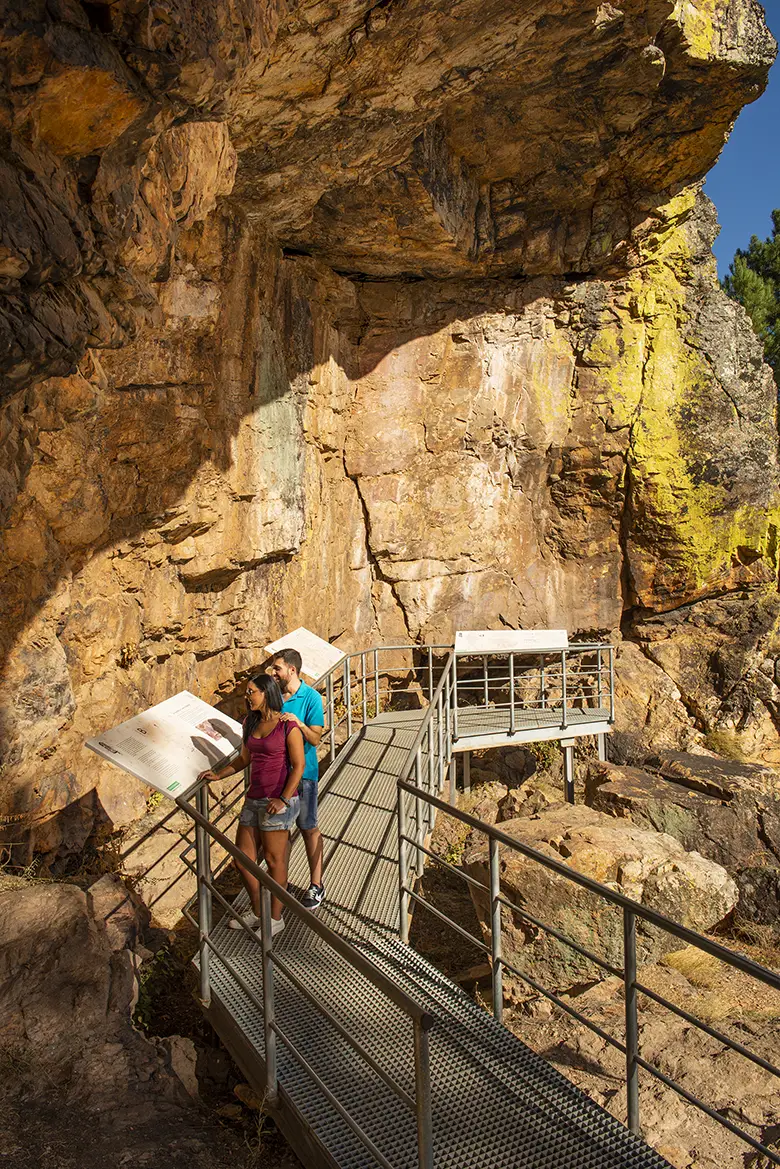
We carry on towards Berzocana and the journey takes us back in time once more. Here, the landscape reveals not only the geological history of the area, but also its human history. The Cancho de la Sábana is home to cave paintings that remind us that people lived here long before we arrived with our cameras and batteries at 12 %. → TOP: take a closer look at the two remarkable trees in the village: the ‘mesto’ in the pasture and the oak of La Nava.

Mina Costanaza · Logrosán
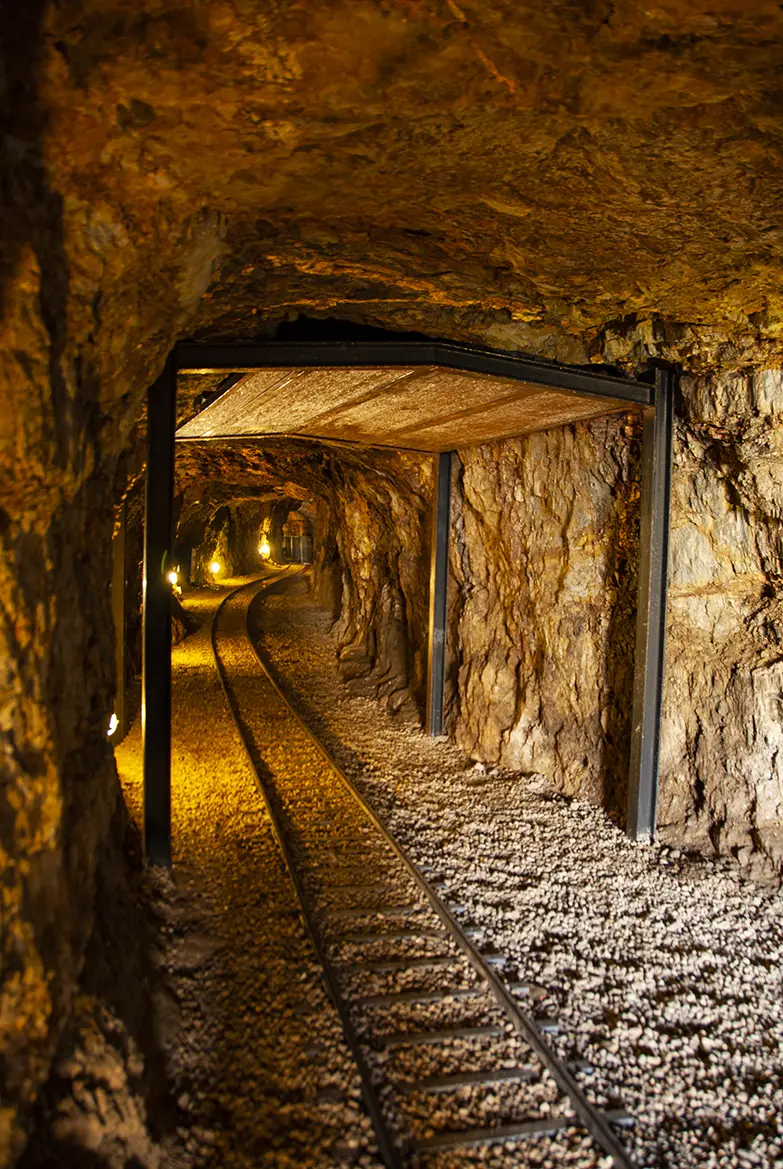
Whilst up to now we have been observing the landscape from the outside, here we are going to step right into it. The Costanaza mine is a former phosphorite and cassiterite mine and one of the geopark’s most remarkable geological experiences. The tour takes you through its tunnels and down in an authentic mine cart to discover what it was like to work underground. → TOP: climb San Cristóbal Hill to gaze at the night sky. The Roso de Luna stargazing viewpoint awaits you.

Cañamero and the Chiquita Cave
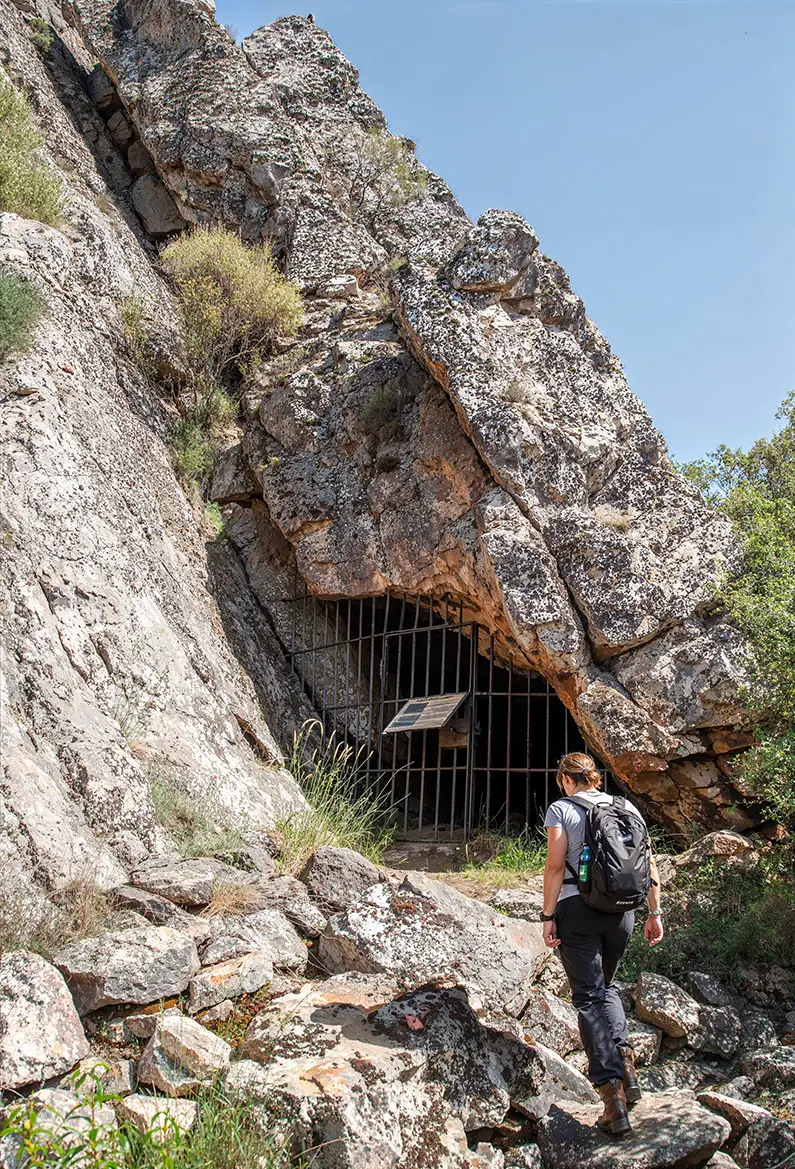
Cañamero is another of the geopark’s major gateways, and here history is once again hidden beneath the rocks. The Chiquita Cave contains cave paintings and offers another glimpse into the lives of the area’s earliest inhabitants. Thousands of years later, we’re still doing much the same thing: leaving messages on the walls. Although now we call them ‘stories’. → TOP: If you’re looking for something even more natural, carry on to the nearby Charco de la Nutria (200 m away), a natural pool nestled in the Ruecas Gorge. A swim plus prehistory: a plan that’s hard to beat.

Cancho del Fresno Beach
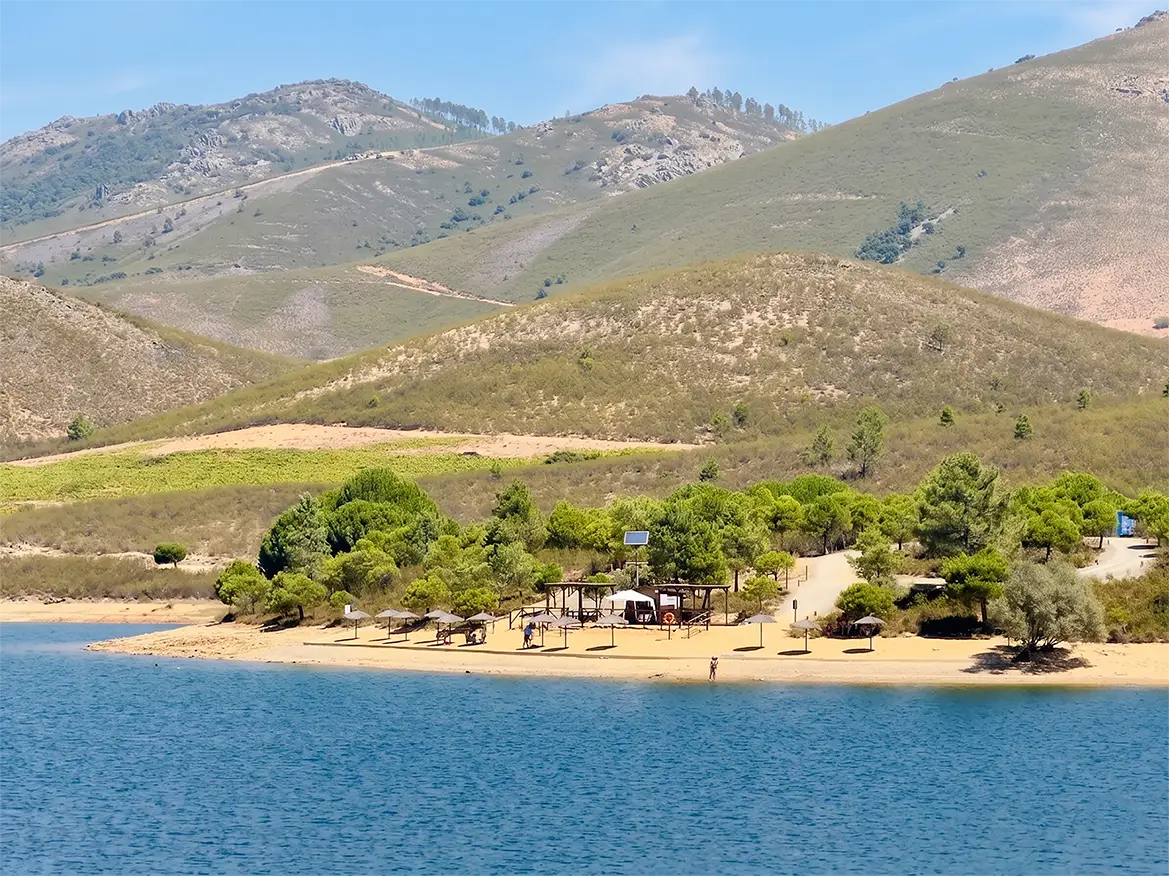
If it’s summer, the next stop needs little introduction. The beach at the Cancho del Fresno reservoir, in Cañamero, boasts calm waters, sandy shores and spectacular views of the Apalachean landscape, with the Villuercas peak in the background. Here you can simply go for a swim. You can also try your hand at stand-up paddleboarding, kayaking or follow the Isabel la Católica trail. But we won’t judge anyone who prefers to just lie back and relax.

The Way of Guadalupe
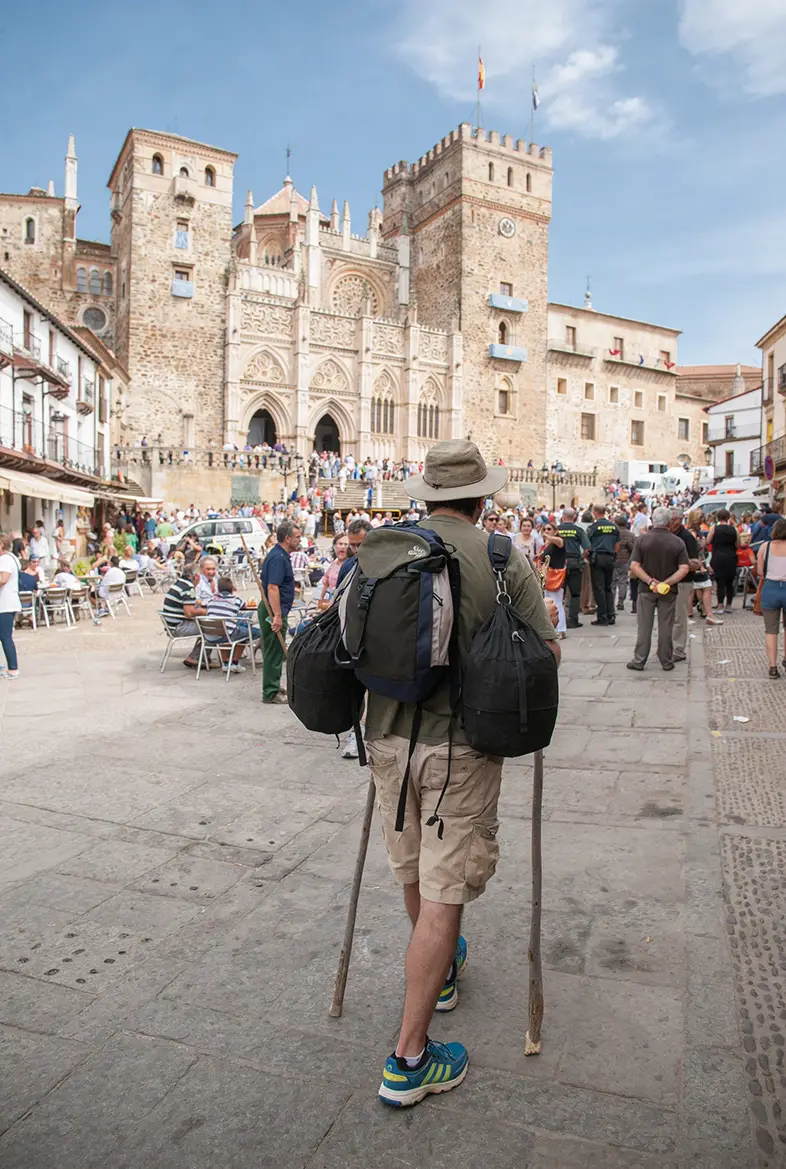
The final few kilometres. The road winds its way through mountains, valleys and forests as we approach Guadalupe. The terrain becomes gentler, but the landscape remains just as striking. And we arrive in Guadalupe. After two days spent admiring pastures, stars, birds, paintings, minerals and mountains, one of Extremadura’s great heritage sites comes into view: the Royal Monastery of Santa María de Guadalupe, a UNESCO World Heritage Site. But the destination is not just the monastery. La Puebla de Guadalupe, with its streets, arcades and traditional houses, is part of the experience.
A FINAL
This is where Getaway 4 comes to an end. After two days spent amongst pastures, stars, birds, cave paintings, mines, water and mountains, we arrived in Guadalupe. The landscape has told a story spanning millions of years, and it took us barely two days to explore it. And now, it’s time to rest. Although, seeing how much there’s still to discover in the geopark, we’ll probably set off again tomorrow.